The Hidden Costs Beneath Your California Home: Why Service Line Coverage Matters
Honestly, it’s easy to feel a bit lost when it comes to home insurance. You pay your premiums, you hope you never need it, and you trust it’ll be there if disaster strikes. But sometimes, what you *think* is covered isn’t. And that can lead to a truly unwelcome surprise – a bill for thousands, sometimes tens of thousands, of dollars for something you never even considered. No one wants that kind of shock. It’s enough to make you dread every drip and gurgle.
For many California homeowners, especially those in older neighborhoods from Ventura County down to San Diego, or in established parts of the Central Valley, there’s a particular kind of vulnerability lurking right under their feet: the service lines running to their house. These aren’t just minor pipes or wires. We’re talking about the main arteries that bring water, gas, electricity, and communication into your home, and carry wastewater away. When one of those fails, it’s not just an inconvenience; it’s a full-blown emergency.
What Exactly Is a Service Line and Why Should You Care?
Think about it: your house needs utilities to function, right? Water for drinking and bathing. Gas for heating and cooking. Electricity for everything else. A sewer line to take away waste. These aren’t magic. They come from the street, sometimes from hundreds of feet away, and travel through your property, underground, to connect to your home. That’s your service line.
Most people assume that if something breaks on their property, their standard homeowner’s policy will just take care of it. Makes sense, doesn’t it? But here’s the kicker: standard policies *don’t* usually cover the repair or replacement of these exterior service lines. Not for a burst water pipe. Not for a collapsed sewer line. Not for a severed electrical conduit. That’s a big difference.
Imagine waking up to a swamp in your front yard because the main water line from the street burst. Or maybe your sewer line clogs, and the backup isn’t just in your basement – it’s because a tree root from that ancient oak out front finally strangled the pipe. These aren’t rare occurrences. In older California towns like Pasadena, Berkeley, or even parts of the Inland Empire, aging infrastructure means these lines are often decades old. They’ve seen a lot of wear and tear, seismic shifts, and hungry tree roots.

The Real World Costs of a Buried Problem
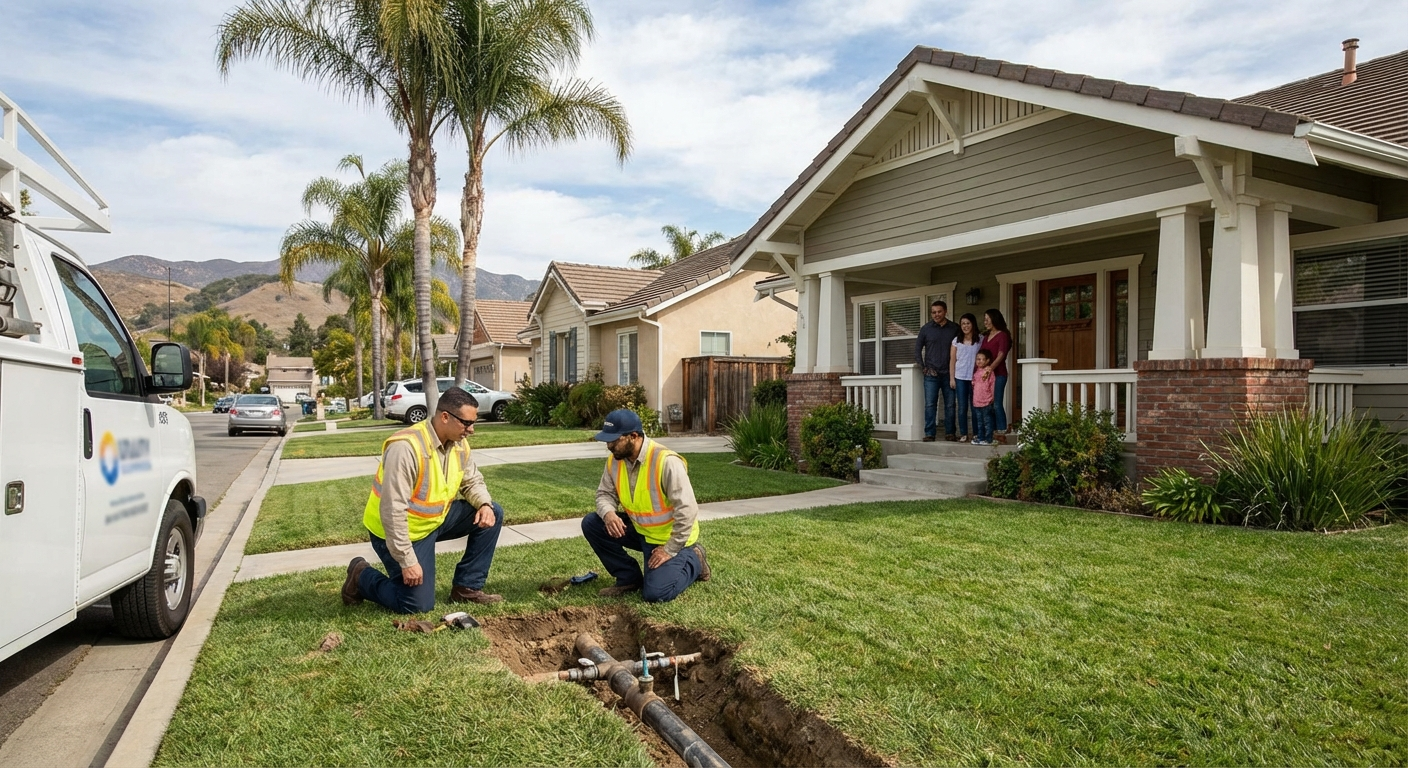
So, what happens when a service line breaks? First, you’ve got the immediate problem: no water, no power, or raw sewage backing up. Then comes the discovery process. Someone has to locate the break. That often means digging. Big trenches. Sometimes through concrete driveways or expensive landscaping. Once the break is found, you’ve got to repair or replace the damaged section.
The costs pile up fast. You’re paying for excavation, the actual pipe or wire replacement, the labor, and then, often, the cost to put everything back together – refilling the trench, repairing your driveway, replanting your garden. Digging up your yard and replacing a main line can easily run you $5,000 to $15,000, sometimes even more, especially if you’re in a dense urban area like San Francisco or West Los Angeles where permits and specialized contractors add to the expense. A recent client in Sacramento faced a $12,000 bill just for a sewer line repair that wasn’t covered. That’s a huge, unexpected hit.
This is where service line coverage steps in. It’s an optional add-on to your home insurance policy, specifically designed to cover these exact scenarios. It’s not just for older homes either. Even newer construction can have issues with shifting soil, faulty installation, or unexpected ground movement.
What Does Service Line Coverage Actually Cover?
Good question. It’s pretty specific, but also wonderfully broad within its scope. Generally, it covers:
* **Water piping:** The main line bringing fresh water to your home.
* **Sewer piping:** The main line taking wastewater away.
* **Gas piping:** The line bringing natural gas to your appliances.
* **Permanent underground power lines:** The electrical conduit from the utility to your meter.
* **Data and communications lines:** Think internet or cable lines buried on your property.
It covers damage caused by a whole host of problems: wear and tear, rust, corrosion, tree roots, freezing, thawing, even mechanical breakdown. Which brings up something most people miss: it usually covers not just the *repair* of the line itself, but also the excavation costs, the extra expenses to speed up repairs, and even temporary living expenses if the damage makes your home uninhabitable. That’s a lot of peace of mind for what’s often a surprisingly small premium.
But Wait — What Doesn’t It Cover?
Like all insurance, there are always some limits and exclusions. Service line coverage typically doesn’t cover:
* **Shared lines:** If you share a line with a neighbor, coverage can get tricky.
* **Internal plumbing:** Once the pipe is inside your house, it falls under other parts of your standard policy.
* **Septic tanks or drain fields:** These usually aren’t considered service lines.
* **Sprinkler systems or outdoor lighting lines:** These are generally separate.
* **Damage from an earthquake or flood:** These are typically excluded and require separate policies (like a California earthquake policy).
It’s always important to read your specific policy documents. Every insurer, whether it’s State Farm, AAA, Farmers, or another carrier, will have slightly different terms. That’s why having a real person, an expert, help you understand the details really matters.
The Empathetic Approach: Why This Matters More Than Ever in California
We’re living in a time when insurance in California feels more complicated and more expensive than ever. Wildfires, rising construction costs, and even changes to the FAIR Plan have homeowners feeling the squeeze. Premiums jumped 40% between 2022 and 2024 for many. Adding *another* coverage might feel like just one more expense.
But here’s the thing: service line coverage is often one of the most affordable add-ons you can get. For a relatively small annual premium – sometimes less than a good dinner out – you can protect yourself from a five-figure bill. When you’re already grappling with higher deductibles and reduced coverage options, avoiding a massive, unexpected repair bill for something out of sight, out of mind, feels like a genuine relief.
It’s about protecting your savings. It’s about avoiding that stomach-dropping moment when a contractor tells you the problem is underground, and you’re suddenly on the hook for thousands. It’s about knowing that if that old sewer line finally gives out in your 1950s tract home in the Valley, you won’t have to choose between fixing it and other family priorities.
Finding the right coverage, at the right price, for your California home can be a challenge. You don’t have to figure it all out alone. Karl Susman and the team at Best California Home Insurance understand the unique pressures California homeowners face. We’ve been helping people like you navigate these complex waters for years, with empathy and clear, honest advice. Our CA License #OB75129 means we’re held to high standards, and our focus is always on your peace of mind.
Ready to explore your options and see if service line coverage makes sense for your home? It’s a simple conversation that could save you a lot of grief.
Click here to get a no-obligation quote today!
Frequently Asked Questions About Service Line Coverage
Is service line coverage included in my standard California home insurance policy?
Not usually. Most standard homeowner policies in California specifically exclude damage to underground service lines. It’s almost always an optional add-on that you need to request.
How much does service line coverage typically cost?
The cost can vary by insurer and your specific property, but it’s generally one of the more affordable endorsements. Many homeowners find it adds only a small amount to their annual premium, often less than $100-$200 per year, for coverage limits that can be up to $10,000 or $20,000.
What’s the difference between a service line and my home’s internal plumbing?
A service line is the main utility pipe or wire that runs from the public utility connection (usually at the street) to your home’s foundation. Internal plumbing starts once those lines enter your house and branch out to fixtures. Service line coverage focuses on the exterior, underground portion.
Will this coverage pay to upgrade my old pipes to new ones?
Generally, service line coverage pays for the repair or replacement of the damaged section of the line. It’s usually not designed to cover voluntary upgrades to a newer, better system unless a covered peril caused the damage and replacement is the necessary repair.
My city is responsible for the lines under the street. Am I still responsible for anything?
Yes, absolutely. While cities maintain the main lines under public streets, you, the homeowner, are almost always responsible for the portion of the service line that runs from the main connection point (often at your property line) all the way into your house. This can be a significant distance, and a significant cost.
Ready to see how affordable protecting your home’s hidden infrastructure can be? Let’s chat about your options and get you the right coverage.
Get a free California home insurance quote here.
This article is for informational purposes only and does not constitute financial advice.