The Shifting Sands Beneath Your California Home
For anyone owning a home in California, the thought of foundation trouble can send a shiver down your spine. It’s not just a small crack in the plaster; it’s the very bones of your house. And here, in a state known for its dramatic geological shifts and diverse soils, foundation damage isn’t some far-fetched nightmare. It’s a real, often expensive, possibility.
What Exactly Counts as Foundation Damage?
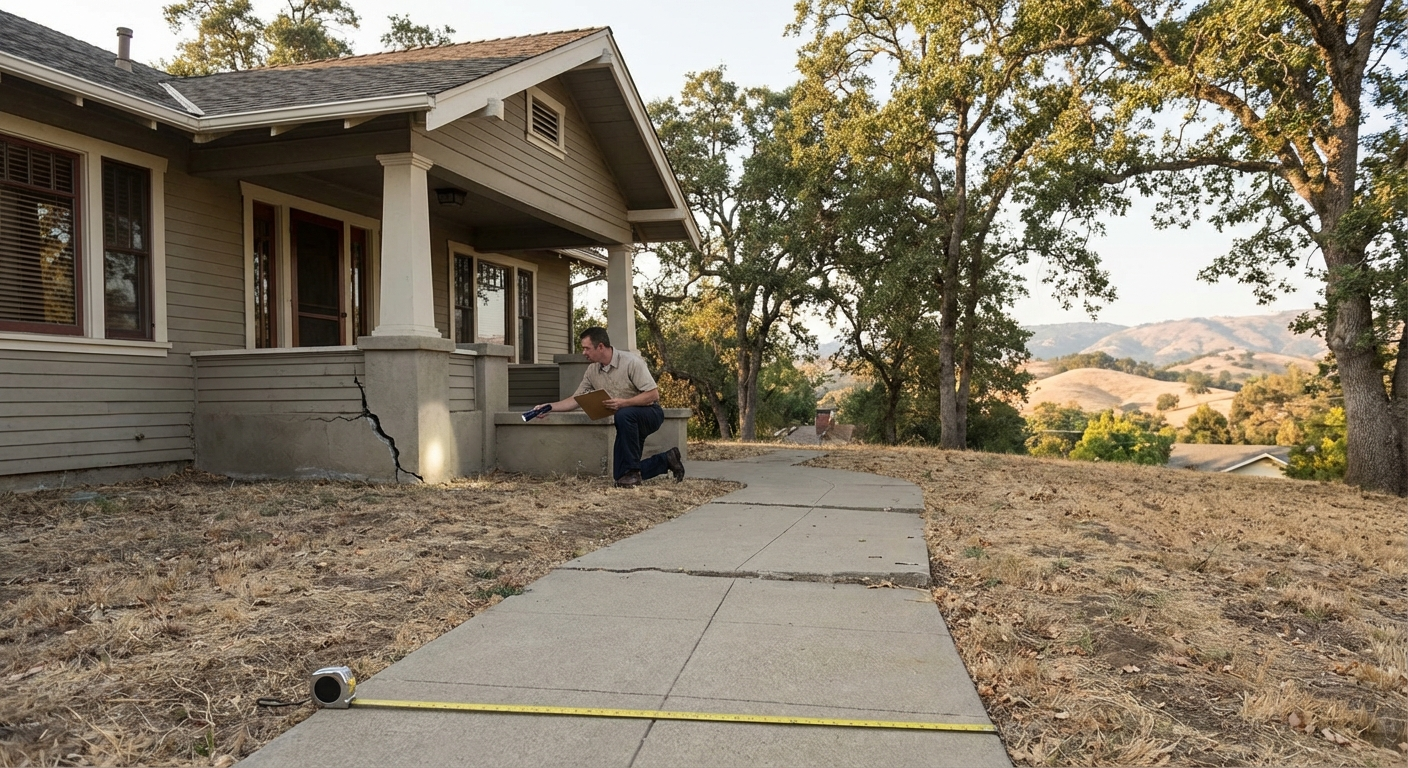
Before we get into insurance, let’s talk about what we’re actually looking at. Foundation damage isn’t always a dramatic collapse. It can start subtly: hairline cracks in the concrete slab, sticking doors or windows, uneven floors, or even gaps appearing between walls and ceilings. These are often signs that your home’s foundation is moving, settling, or cracking.
What causes it? In California, you’ve got a few usual suspects. Expansive clay soils, common in places like the Inland Empire or parts of the Valley, swell when wet and shrink when dry. This constant movement can push and pull at your foundation. Then there’s seismic activity. Earthquakes, even minor ones, can cause stress fractures. Poor drainage around your home can let water seep under the slab, eroding soil or causing hydrostatic pressure. Sometimes, it’s just old age and the natural settling of a house built decades ago in Hollywood Hills.

Does Home Insurance Cover Foundation Repairs?
This is where things get complicated. The short answer is yes, sometimes. The real answer is more nuanced, and it hinges entirely on *what caused* the damage. Your standard California homeowners insurance policy isn’t a magic blanket that covers every single crack or sag.
Think of it this way: your policy is designed to cover sudden, accidental events. A pipe bursts under your slab, saturating the soil and causing a section of your foundation to crack? That’s often covered. A car drives into your house, damaging the foundation? Absolutely. A fire weakens the structural integrity? You’re likely in luck. These are all “perils” specifically listed in your policy that trigger coverage.
But here’s where it gets interesting. Most policies have a long list of things they *don’t* cover. And many of those exclusions are directly related to common causes of foundation issues in California.
The Big Exclusions: What Your Policy Probably Won’t Cover
This is the part that catches many homeowners off guard. Standard home insurance policies in California almost universally exclude damage caused by “earth movement.” What does that mean? It means earthquakes, landslides, mudslides, sinkholes, and even simple earth shifting or settling are typically *not* covered.
You’d think an earthquake would be the ultimate “sudden, accidental event.” But no. For that, you need a separate earthquake insurance policy, usually offered through the California Earthquake Authority (CEA) or a private insurer. And even then, earthquake policies have high deductibles – often 10% to 25% of your dwelling coverage – meaning you’d pay a huge chunk out of pocket before coverage kicks in. For a home insured for $800,000, that’s an $80,000 to $200,000 deductible. Big difference.
Another common exclusion is “gradual deterioration” or “wear and tear.” If your foundation simply cracks over 30 years because it’s old, or because of poor construction practices from decades ago, your standard policy won’t pay for repairs. Insurers expect you to maintain your home. They’re not a maintenance fund.
Water Damage: A Fine Line
Water damage is a tricky one. If a sudden event, like a burst pipe under your house, causes foundation damage, you’re usually covered. This is considered a “sudden and accidental discharge” of water.
But wait — what if you have a slow, persistent leak from that same pipe that goes unnoticed for years, gradually eroding the soil and weakening the foundation? That’s typically *not* covered. Why? Because it’s considered gradual damage, something that could have been prevented with proper maintenance and inspection. This distinction between “sudden” and “gradual” is a battleground for many insurance claims.
The California Insurance Market: A Tough Spot
If you’ve been paying attention to the news, you know California’s insurance market is in a rough spot. Premiums for homeowners insurance have jumped, sometimes 30% to 50% between 2022 and 2024 for many homeowners. Some major insurers, like State Farm and Farmers, have stopped writing new policies in certain areas or pulled back significantly. This isn’t just about wildfire risk, though that’s a huge factor, especially in places like Ventura County or the Sierra foothills. It’s also about rising construction costs, reinsurance expenses, and the sheer number of claims.
This makes finding comprehensive coverage, especially for something as fundamental as your foundation, even harder. Insurers are tightening their belts, and policies are becoming more restrictive. It’s not uncommon to see higher deductibles or more specific exclusions for certain types of damage.
Preventative Measures: Your Best Defense
Since insurance often has limitations, your best defense against foundation damage is prevention. Good drainage around your home is key. Make sure rainwater flows away from your foundation, not toward it. Keep your gutters clean. Address any leaks, big or small, immediately. Consider professional foundation inspections, especially for older homes or if you notice any early warning signs. Regular maintenance isn’t just about curb appeal; it’s about protecting your biggest asset.
Finding the Right Policy in a Challenging Market
Navigating California’s home insurance market, especially with the complexities of foundation coverage, can feel like a maze. It’s not just about getting the cheapest policy; it’s about getting the *right* policy – one that actually protects you when you need it most. This means understanding the fine print, the exclusions, and the specific perils your policy covers.
This is where an independent insurance agent becomes invaluable. They work with multiple carriers, not just one, and can help you compare policies, understand the differences, and find coverage that fits your specific needs and risk profile. They can explain the nuances of earth movement clauses, water damage definitions, and how earthquake coverage truly works.
Someone like Karl Susman, with Best California Home Insurance (CA License #OB75129), has been helping Californians understand these complex issues for years. He and his team can cut through the jargon and explain what you’re really getting – or not getting – with your policy. They deal with these issues every day and know the ins and outs of what different insurers offer in this state.
Ready to get a clearer picture of your home insurance options? Don’t wait until you see that first crack.
Get a California Home Insurance Quote Today
What to Do If You Suspect Foundation Damage
If you start seeing signs of foundation trouble – those sticking doors, new cracks, or uneven floors – don’t panic, but don’t ignore it either.
1. Document Everything: Take photos and videos. Note dates when you first noticed issues.
2. Contact a Structural Engineer: Get a professional opinion. A structural engineer can assess the damage, determine the cause, and recommend repairs. This report will be crucial for any potential insurance claim.
3. Review Your Policy: Pull out your home insurance policy. Look specifically at the “Perils Insured Against” and “Exclusions” sections. Pay close attention to language around earth movement, water damage, and gradual deterioration.
4. Call Your Agent: Before filing a claim, talk to your insurance agent. They can help you understand if your damage is likely covered and guide you through the process. Sometimes, the cost of repairs might be less than your deductible, making a claim unnecessary.
It’s a tough situation, but being informed and proactive is always your best bet. Knowing your policy and having an expert on your side can make all the difference when your home’s foundation is at stake.
Don’t leave your biggest asset exposed to the unexpected. Get clarity on your coverage.
Get a California Home Insurance Quote Today
Frequently Asked Questions About California Foundation Damage & Insurance
Q: Is foundation damage from a leaky pipe always covered?
A: Not always. If the leak was sudden and accidental – say, a pipe burst – it’s often covered. But if it was a slow, long-term leak that you reasonably should have discovered and fixed, it might be considered gradual damage and excluded from coverage.
Q: Do I need earthquake insurance for foundation cracks?
A: If the foundation cracks were caused by an earthquake, then yes, you’d need a separate earthquake insurance policy. Your standard home insurance won’t cover earthquake damage, including to the foundation.
Q: What’s the difference between “settling” and “earth movement” in my policy?
A: “Settling” usually refers to the natural, gradual sinking of a home over time, which is typically excluded as wear and tear. “Earth movement” is a broader exclusion covering things like earthquakes, landslides, and mudslides. Both are generally not covered by standard policies.
Q: Can I get a policy that covers all types of foundation damage in California?
A: No single policy covers *all* types of foundation damage. You might combine a standard homeowners policy (for sudden perils like fire or burst pipes) with a separate earthquake policy (for seismic events). However, damage from things like gradual settling or poor maintenance will almost always be excluded.
This article is for informational purposes only and does not constitute financial advice.