The Afternoon the Sky Fell – And What It Means for Your Roof
It was a Tuesday afternoon, a typical hot one in Riverside. Sarah and Tom, new homeowners in the Inland Empire, were just settling into their rhythm. Their home, a charming ranch house with a perfectly good — or so they thought — tile roof, was their pride and joy. Then, the sky opened up. Not just rain, but a sudden, violent downpour, mixed with hailstones the size of marbles. For twenty minutes, it sounded like rocks hitting their roof.
Later that evening, after the storm passed and the sun peeked out, Tom went into the attic. He found it. A dark, growing stain on the ceiling insulation. Water was definitely getting in. Their hearts sank. “Is this covered?” Sarah asked, her voice tight with worry. It’s a question that echoes across California homes every time a branch falls, a wind gust rips through, or a sudden downpour tests aging shingles.
For most California homeowners, that first thought is usually about the insurance policy. They picture months of contractor visits, mountains of paperwork, and maybe even a fight with their insurance company. The short answer is yes, most sudden and accidental roof damage *can* be covered. The real answer, though, is far more complicated than a simple yes or no.
Not All Roof Damage Is Created Equal (At Least to Your Insurer)
Imagine your roof like your car. If you get into an accident, your insurance covers the damage. But if your engine seizes up because you haven’t changed the oil in 100,000 miles, that’s on you. Home insurance works a lot like that.
In California, insurers look at the *cause* of the damage. Did a massive windstorm tear off shingles in Ventura County? Did a falling oak tree puncture your roof in the Santa Cruz Mountains? Was it hail, like what hit Sarah and Tom’s place? These are generally considered “sudden and accidental” events, often called “perils” in insurance speak. Your policy usually has a list of these covered perils.
But here’s the thing. If your roof is just old, maybe 20, 25 years old, and it starts leaking because the materials have simply worn out over time, that’s not typically covered. That’s a maintenance issue. Same goes for damage that could have been prevented, like ignoring a small leak for months until it becomes a huge problem. Your insurer expects you to maintain your home, including its roof. They won’t pay for deferred maintenance.
The “Act of God” Clause – And Why It Matters Less Than You Think
You might hear people talk about “Acts of God” when it comes to insurance. Really, that’s just a poetic way of saying “natural disasters.” Most standard California home insurance policies *do* cover damage from things like wind, hail, lightning, and fire. Remember the devastating fires that have swept through places like Paradise or the hills around Malibu? Fire damage to your roof would absolutely be covered by your standard policy.
But wait — there are big exceptions. Earthquakes, for example, aren’t covered by a typical homeowner’s policy. You need a separate earthquake policy for that. Flooding, especially the kind that comes from rising water or storm surge, also isn’t covered. That requires a separate flood insurance policy, often through the National Flood Insurance Program. For roof damage, we’re usually talking about things falling *on* it, wind ripping it *off*, or sudden water penetration *from above*.
Filing That First Claim: A Step-by-Step for the Stressed Homeowner
When that unexpected roof damage hits, panic can set in. But taking a few clear steps can make the whole process smoother.

Step One: Stop the Bleeding (Literally)
If you have a hole in your roof and water is pouring in, your first priority is to prevent more damage. This means temporary repairs. Get a tarp up there. Move furniture. Put buckets down. Take photos and videos *before* and *during* these temporary fixes. Document everything. Insurers expect you to mitigate further damage. Don’t let a small leak turn into a ruined ceiling because you waited for the adjuster.
Step Two: Making the Call (And What to Say)
As soon as it’s safe and you’ve secured the immediate area, call your insurance company. Whether you’re with State Farm, AAA, Farmers, or another carrier, they’ll want details: what happened, when it happened, and the extent of the visible damage. Be honest and factual. Don’t exaggerate, but don’t downplay it either. You’ll get a claim number, and they’ll usually assign an adjuster.
Step Three: The Adjuster’s Visit – Your Home’s Report Card
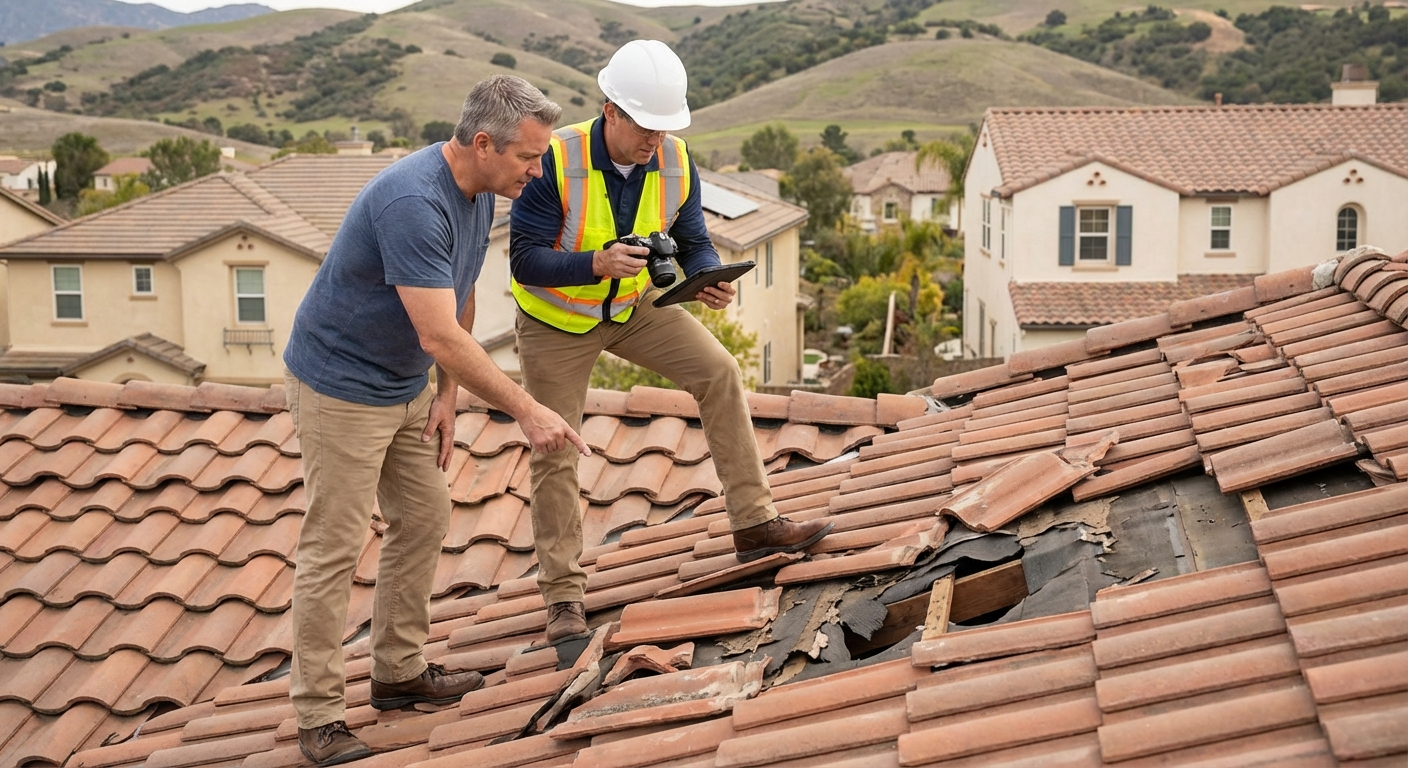
An insurance adjuster will come to your home to assess the damage. They’ll get on the roof, measure, take photos, and look for specific signs of damage caused by a covered peril. They’re looking for evidence of wind lift, hail impact marks, or puncture points. They’re also assessing the overall condition of your roof. If it looks like it was already falling apart, that’s a red flag for them.
It’s a good idea to be there during the inspection. Ask questions. Point out things you’ve noticed. If you’ve had a contractor give you an initial opinion, share that information. This is where the rubber meets the road. The adjuster’s report forms the basis for your claim payout.
The Elephant in the Room: Depreciation, Deductibles, and Your Policy Type
Here’s where it gets interesting, and frankly, where many homeowners get a nasty surprise. Most California home insurance policies come in one of two flavors when it comes to covering your roof: Replacement Cost Value (RCV) or Actual Cash Value (ACV).
With an **RCV policy**, your insurer pays to replace your damaged roof with a new one of similar quality, *without* deducting for depreciation. This is the gold standard. If your roof is 15 years old and gets totaled by a storm, they’ll pay to put on a brand-new roof. You just pay your deductible.
An **ACV policy** is different. It pays for the depreciated value of your roof. Imagine that 15-year-old roof again. If it has a 20-year lifespan, it’s 75% “used up.” An ACV policy would only pay you for that remaining 25% of its value, minus your deductible. Big difference. Many older roofs, or roofs made of certain materials like wood shake, might only qualify for ACV coverage, especially in higher fire-risk areas like parts of Sonoma County or the Sierra foothills. Always know which type of coverage you have.
Then there’s your deductible. This is the amount you pay out-of-pocket before your insurance kicks in. For roof damage, it could be a flat dollar amount ($1,000, $2,500) or a percentage of your home’s dwelling coverage (e.g., 1% or 2%). If your roof repair is $5,000 and you have a $2,500 deductible, you’ll only get $2,500 from the insurer. Sometimes, minor repairs might not even exceed your deductible, meaning filing a claim wouldn’t make financial sense.
The Dreaded Denial – And What You Can Do About It
No one wants to hear their claim is denied. But it happens. Common reasons? “Wear and tear,” “pre-existing damage,” “poor maintenance,” or “damage didn’t meet the deductible.” Your insurer might say the roof simply wore out, or that a small leak you ignored for years caused the major damage.
If your claim is denied, or if the payout seems too low, you’ve got options. First, review the denial letter carefully. Understand their reasoning. Sometimes, getting a second opinion from a reputable, independent roofing contractor can help. They might find evidence of covered peril damage that the adjuster missed.
Which brings up something most people miss. This is where an experienced independent insurance agent becomes invaluable. Someone who understands the nuances of California insurance policies and has seen countless claims. Karl Susman of Best California Home Insurance, CA License #OB75129, has been helping California homeowners navigate these choppy waters for decades. He knows the ins and outs, can explain why a claim might have been denied, and can even help you appeal the decision or guide you on the next steps. Don’t hesitate to reach out to him at (877) 411-5200.
When to Call an Expert (Before You Even Have a Hole in Your Roof)
Honestly, the best time to talk to an insurance expert about your roof coverage is *before* any damage happens. Understand your policy’s terms, what your deductibles are, and whether you have RCV or ACV coverage for your roof. Many homeowners don’t realize these details until it’s too late.
Consider a proactive approach. Get your roof inspected every few years by a qualified professional. They can spot small issues – loose shingles, cracked tiles, worn-out flashing – before they become major problems that could lead to a claim denial. Think of it as preventative medicine for your house.
An independent agent like Karl Susman doesn’t work for just one insurance company. He works for *you*. He can shop around, compare policies from multiple carriers, and explain the fine print in plain language. He can help you find a policy that provides the best protection for your roof, whether you’re in Orange County, Sacramento, or the high desert.
Want to talk through your current policy or explore options for better coverage? Get a quote today and let a professional guide you through the complexities of California home insurance. Visit https://bestcaliforniahomeinsurance.com/quote/.
The Future of Roof Coverage in the Golden State
California’s insurance landscape is changing rapidly. With increasing risks from wildfires and more intense weather events, insurers are being more selective. Premiums jumped significantly between 2022 and 2024 for many homeowners. Some major carriers have even pulled back from offering new policies in certain high-risk areas. This means staying informed and having the right coverage is more critical than ever.
Your roof is your home’s first line of defense against the elements. Protecting it, and understanding how your insurance protects it, isn’t just about avoiding a financial hit; it’s about peace of mind. As Sarah and Tom learned, a sudden storm can turn a peaceful afternoon into a stressful ordeal. Being prepared makes all the difference.
Don’t wait for the next storm to hit. Find out how to protect your home and your peace of mind. Get a personalized home insurance quote now at https://bestcaliforniahomeinsurance.com/quote/.
Frequently Asked Questions About California Roof Damage Claims
Does my standard CA home insurance cover roof leaks?
It depends on what caused the leak. If the leak is due to a sudden, unexpected event like a windstorm tearing off shingles, hail damage, or a falling object, your standard policy likely covers it. However, if the leak is from old age, lack of maintenance, or simply a worn-out roof, it’s generally not covered.
Will my premium go up if I file a roof damage claim?
It’s possible. Filing any claim, including for roof damage, can sometimes lead to an increase in your premium at renewal time. Insurers assess risk, and a recent claim can signal higher future risk. However, the amount of the increase can vary based on your insurer, the claim amount, and your claims history.
What’s the difference between RCV and ACV for my roof?
RCV (Replacement Cost Value) pays for the cost to replace your damaged roof with a new one of similar quality, without subtracting for depreciation. ACV (Actual Cash Value) pays for the depreciated value of your roof, meaning it factors in the roof’s age and wear and tear, paying out less than a full replacement. RCV offers better protection but might come with a higher premium.
How often should I have my roof inspected to avoid claim issues?
Most experts recommend having your roof inspected by a professional every 3-5 years, especially if it’s over 10 years old or after any significant weather event. Regular inspections can identify small issues before they become major problems that could lead to a denied claim due to lack of maintenance.
Can I choose my own contractor for roof repairs?
Generally, yes, you have the right to choose your own contractor. Your insurance company might suggest contractors they work with, but you are not obligated to use them. It’s often a good idea to get multiple bids and choose a licensed, reputable contractor you trust.
This article is for informational purposes only and does not constitute financial advice.