Your Backyard Oasis: Protecting What’s Beyond Your Main Home
The Millers, a couple living in Santa Barbara, spent years dreaming of a little backyard escape. They finally built it: a charming, detached studio perfect for painting, or maybe a quiet place for their college-aged daughter when she visits. It wasn’t a full-blown ADU – no kitchen, just a bathroom – but it was a substantial investment. When wildfire season rolled around, as it always does in Ventura County, Mrs. Miller started to wonder. “Is this studio actually covered by our home insurance?” she asked her husband. Good question. Most homeowners just think about the big house. They often forget the other structures on their property, until something happens.
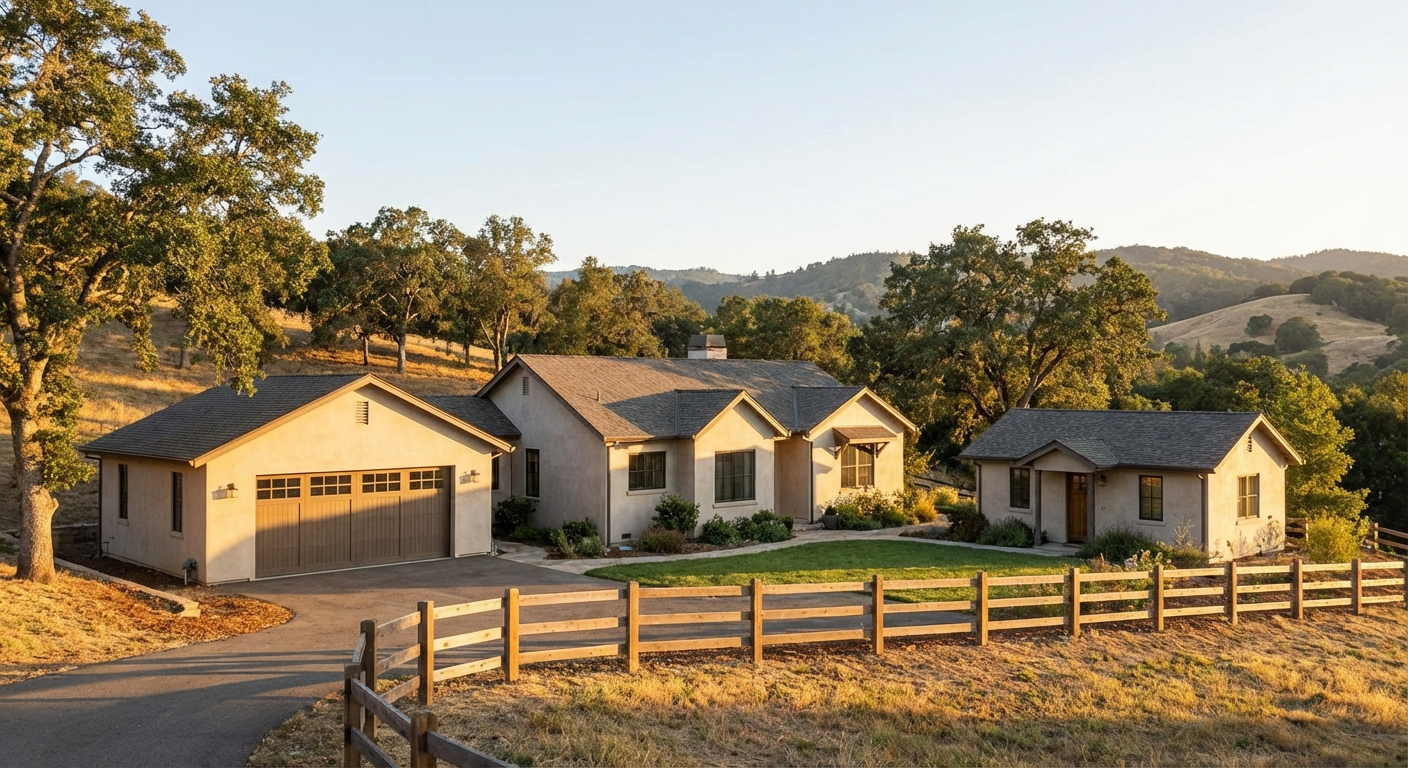
That’s where “other structures” coverage comes in, often called Coverage B on your California home insurance policy. It’s the unsung hero, the quiet protector of everything else standing on your land that isn’t your main dwelling. We’re talking about your trusty garden shed, the fence that gives you privacy, a detached garage, that fancy gazebo you bought for outdoor entertaining, or even a pool house. If it’s separate from your main home, it generally falls under this specific part of your policy.
What Exactly Counts as an “Other Structure”?
Think of anything that’s permanently built on your property but isn’t physically attached to your house. That’s the key: *detached*. A shed where you keep your tools? Yes. A standalone garage for your classic car? Absolutely. A fence running along your property line? Yep. What about a beautiful stone wall or a retaining wall? Those often fall under Coverage B too. Even a doghouse, if it’s built like a mini-home and not just a plastic kennel, could count.
California, in particular, has seen a boom in Accessory Dwelling Units, or ADUs. These are often fully functional small homes, like what the Millers have, but bigger. Many folks assume their ADU is automatically covered under their main dwelling’s insurance. That’s not always true. If your ADU is detached, it’s very likely falling under Coverage B. This is a big difference, especially with the cost of building anything in the Golden State these days.

Why This Matters So Much in California
Honestly, in a state like California, ignoring your other structures coverage is a gamble you really shouldn’t take. We’ve got unique risks that hit these structures hard.
Consider wildfires. They don’t just consume homes; they often start with fences, sheds, and landscaping structures. These smaller buildings, sometimes made of less fire-resistant materials, can act as kindling, drawing fire closer to your main house. When a brush fire rips through the hills of Sonoma County or races through the dry canyons near the Inland Empire, those detached structures are often the first things to go. Rebuilding a fence that spans hundreds of feet can cost tens of thousands of dollars now. Try replacing a detached garage that held your workshop and all your tools – that’s a serious financial hit.
Then there’s the sheer cost of rebuilding. Construction costs across California have soared. Lumber, labor, permits – everything’s more expensive than it was just a few years ago. If your shed burns down, or your fence gets knocked over by a rogue tree during a winter storm, the money to replace it might surprise you. You’ll want enough coverage to actually replace it, not just get a fraction of its value.
How Much Coverage Do You Really Need?
Here’s where it gets interesting. Most standard home insurance policies automatically set your other structures coverage at a percentage of your main dwelling’s coverage. Often, it’s 10%. So, if your home is insured for $500,000, your other structures might be covered for $50,000.
But wait — is $50,000 enough? For the Millers’ art studio, which cost a pretty penny to build with its custom windows and plumbing, $50,000 might barely scratch the surface if it were to burn down. If you have a large detached garage, a fancy pool house, or a fully equipped ADU, that 10% figure is almost certainly not enough.
You can, and often should, increase this limit. It usually means paying a bit more on your premium, but it’s a small price for peace of mind. Think about the replacement cost of each detached structure on your property. Imagine having to rebuild them from scratch today. Get estimates if you need to. Don’t just guess.
Most policies will cover “other structures” at replacement cost, meaning they’ll pay to rebuild it new. But always double-check your policy. Some older policies or those from less common insurers, especially in high-risk wildfire areas, might offer Actual Cash Value (ACV) for certain structures. ACV means they’ll pay out the depreciated value, not the cost to replace it. Big difference.
The California Wildfire Conundrum and Your Other Structures
This conversation about “other structures” can’t happen without talking about California’s unique insurance market, especially with wildfires. Insurers like State Farm and Farmers have pulled back from offering new policies in certain areas. This leaves many homeowners turning to the California FAIR Plan.
The FAIR Plan is a “last resort” insurer, designed to provide basic coverage for properties that can’t get it elsewhere. While it’s a lifesaver for many, it often comes with limitations. For example, FAIR Plan policies might have lower Coverage B limits than a standard market policy, or they might offer ACV for some items where you’d prefer replacement cost. If you’re relying on the FAIR Plan, you absolutely need to scrutinize your Coverage B limits. Karl Susman at Best California Home Insurance, CA License #OB75129, has seen countless clients misunderstand their FAIR Plan coverage, especially when it comes to fences and sheds in brush zones. Give his team a ring at (877) 411-5200 if you have questions.
Prop 103, passed back in 1988, regulates how insurance rates are set in California, aiming to keep them fair. While it’s done a lot of good, the current environment with massive wildfire losses is testing its limits. Insurers argue they need more flexibility to price risk, especially for properties in areas prone to the 2025 LA fires. This ongoing tension means policy terms and availability can shift, affecting even seemingly small details like your other structures coverage.
Making a Claim: What Happens?
Imagine a scenario: a windstorm rips through your backyard, knocking over a large tree that crushes your beloved garden shed. First, you’ll need to report the claim to your insurer. They’ll send an adjuster to assess the damage.
The payout will be subject to your policy’s deductible. If you have a $1,000 deductible, and the shed damage is $5,000, you’d get $4,000. That’s pretty straightforward. But what if the fence damage is only $800? In that case, it wouldn’t meet your deductible, and you’d pay out of pocket.
Which brings up something most people miss. Earthquake damage? That’s almost always *not* covered by your standard home insurance policy, including for other structures. You need a separate earthquake policy for that. This is especially important for things like brick walls or detached garages in seismic zones like those found throughout the Valley.
Common Mistakes People Make
So many homeowners make a few key errors when it comes to other structures:
1. **Underestimating Value:** Assuming their shed or fence isn’t worth much. The cost to replace these things is often higher than you think.
2. **Not Updating After Additions:** You build a new patio cover or a storage unit? You need to tell your insurer. Your coverage won’t automatically adjust.
3. **Ignoring Fair Plan Limitations:** If you’re on the FAIR Plan, don’t just assume it’s as good as a standard policy for Coverage B. It probably isn’t.
4. **Forgetting About HO-3 vs. HO-8:** Most policies are HO-3 (all perils except named exclusions). Some, especially older ones or those in high-risk areas, might be HO-8 (named perils only), which offers much less protection. That affects your other structures, too.
Navigating the complexities of California home insurance, especially with the unique challenges of “other structures” and our state’s specific risks, can feel like a maze. It really helps to have someone who knows the ins and outs. Someone like Karl Susman at Best California Home Insurance has been helping Californians protect their homes – and everything else on their property – for years. He and his team understand the local nuances, whether you’re in Orange County or up near Lake Tahoe.
When you’re ready to get a clear picture of your current policy, or if you’re looking for new coverage that truly protects your entire property, including that backyard studio or detached garage, it’s smart to talk to an expert. They can help you figure out if your 10% Coverage B is enough, or if you need to bump it up.
Ready to see what coverage options are available for your California home and its other structures? Get a personalized quote today: https://bestcaliforniahomeinsurance.com/quote/
Thinking about that detached garage or fancy gazebo on your property? Don’t leave its protection to chance. Find out how to secure the right coverage: https://bestcaliforniahomeinsurance.com/quote/
Frequently Asked Questions About Other Structures Coverage
Does my fence count as an “other structure” for insurance?
Generally, yes. Fences are typically considered “other structures” because they are permanently attached to your property but are detached from your main dwelling. This includes wooden fences, chain link, and masonry walls.
What if I have an ADU (Accessory Dwelling Unit)? Is it covered under “other structures”?
If your ADU is detached from your main house, it will most likely fall under your “other structures” coverage (Coverage B). Given the significant cost of building and rebuilding ADUs in California, the standard 10% of your dwelling coverage often isn’t enough, so you’ll want to increase this limit.
Is damage to my detached garage from an earthquake covered?
No. Standard California home insurance policies, including Coverage B for other structures, do not cover earthquake damage. For earthquake protection, you need to purchase a separate earthquake insurance policy.
How do I know if I have enough “other structures” coverage?
The best way is to estimate the replacement cost of all your detached structures combined. Get quotes for rebuilding a shed, a fence, or your detached garage from scratch. If that total exceeds your policy’s Coverage B limit, you should consider increasing it.
***
This article is for informational purposes only and does not constitute financial advice.